top of page

Species Cards

Aloidendron dichotomum

The quiver tree, a well-known South African and Namibian aloe, is valued for traditional San uses and hollow trunks. It is listed under CITES II and occurs in several protected areas. Climate change may contribute to population decline.

Quiver Tree

Cyclopia pubescens Eckl. & Zeyh.

Cyclopia pubescens is endemic to South Africa and has historically been used by the Khoi-San for its medicinal properties. Recent research done by the ARC identified it as a valuable species to add as a commercial cultivated species for beverage products.

Honeybush

Ecklonia maxima

Ecklonia maxima is a dominant species along the south-west African coast, where it forms extensive kelp forests that are important hubs of marine biodiversity.

Sea bamboo

Xerophyta viscosa

Xerophyta species are desiccation tolerant, with leaves able to survive dehydration to below 5% relative water content. To identify the regulatory switches that protect against desiccation, multiple Xerophyta genomes can be compared.

Small black-stick lily

Sideroxylon inerme

The white milkwood is a protected South African tree found along the southern and eastern coasts, where it dominates parts of the Western Cape’s coastal forests.

White Milkwood

Scelotes sexlineatus

It serves as an important model species for studying specific stages of limb development within the genus Scelotes, representing an intermediate limb development stage (forelimb digits = 0; hindlimb digits = 2), and for investigating the genomic evolution of vertebrates.

Striped Dwarf Burrowing Skink
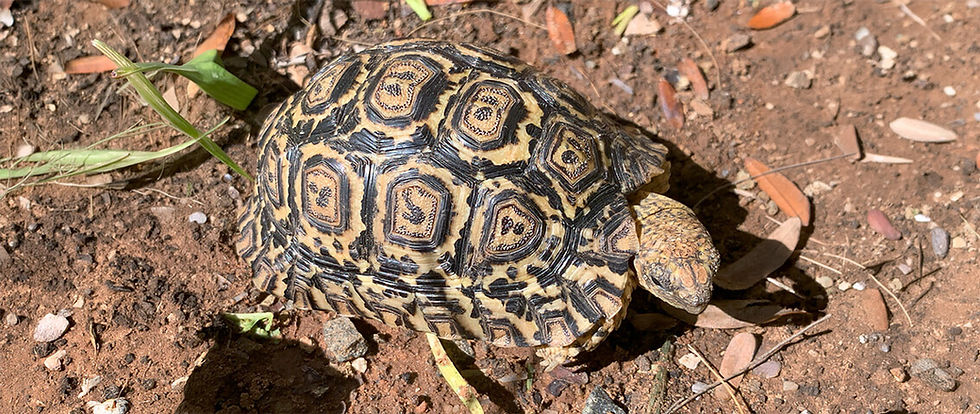
Stigmochelys pardalis

The leopard tortoise is a keystone species in South African savannas, grazing, dispersing seeds, and shaping microhabitats.

Leopard tortoise

Tropidophora ligata

South Africa's indigenous terrestrial snails are valuable bioindicators due to their restricted ranges and microhabitat specialization. Habitat loss threatens many species, highlighting the need to understand their diversity and ecology.

Smooth shuffler

Anthropoides paradiseus

The Blue Crane, South Africa’s national bird, is an important part of the country’s rich avian diversity and holds cultural significance.

Blue Crane

Moraea fugax

An important traditional food source with potential as a wild crop, and crucial for understanding the variability within what is likely an undocumented species complex.

Klipuintjie or Soetuintjie

Euphorbia radyeri

The blounoorsdoring , blue euphorbia in English, is a drought-tolerant succulent valued in ornamental horticulture for water wise gardens. Its stems can be used as emergency livestock fodder after the latex has dried to reduce toxicity.

Blounoorsdoring

Euphorbia mauritanica

The yellow milk bush a is toxic to livestock and sometimes confused with another succulent shrub used as forage, but it is valued as a drought -tolerant ornamental. In southern Africa, members of the Euphorbiaceae face increasing threats from illegal trade, highlighting the need for urgent conservation.

Yellow milk bush

bottom of page