top of page
Group:
Reptile
Estimated genome size:
17 cm maximum (total body length).
Size:
17 cm maximum (total body length).
Distribution:
It is found in the Eastern Cape, Free State, Western Cape and Northern Cape
provinces of South Africa.
PromethION Sequencing Report:
Output:
89.36 Gigabases
Approximate N50:
6.51 kilobases
Draft Genome Assembly Statistics:
Genome Length:
4.53 Gigabases
BUSCO completeness score (single and duplicated genes):
99.6% [Single: 50.6%, Duplicated: 49%]
Importance:
The greater padloper tortoise is endemic to South Africa and contributes to ecosystem stability in the Karoo. As the largest species in the genus Homopus, it is of scientific interest for studies of limb development, as it is one of only two Homopus species with four digits on each foot.
Sample Contributor contact details:
Zhongning Zhao
University of the Free State
Group:
Eudicot
Genome size:
2280 million DNA base pairs (2.28 Gigabases)
Size:
2 meters (height)
Distribution:
Agathosma betulina has a restricted natural distribution area in the Western Cape. It is found on mountain slopes near Niewoudtville, Piketberg and Tulbagh and in the Cederberg Mountains.
PromethION Sequencing Report:
Output:
33.26 Gigabases
Approximate N50:
14.6 kilobases
Assembly N50:
14.6 kilobases
Contig number:
2 751
Draft Genome Assembly Statistics:
Assembler used:
Flye
Genome Length:
0.55 Gigabases
BUSCO completeness score (single and duplicated genes):
99.3% [S:82.2%, D:11.1%]
BUSCO database:
viridiplantae
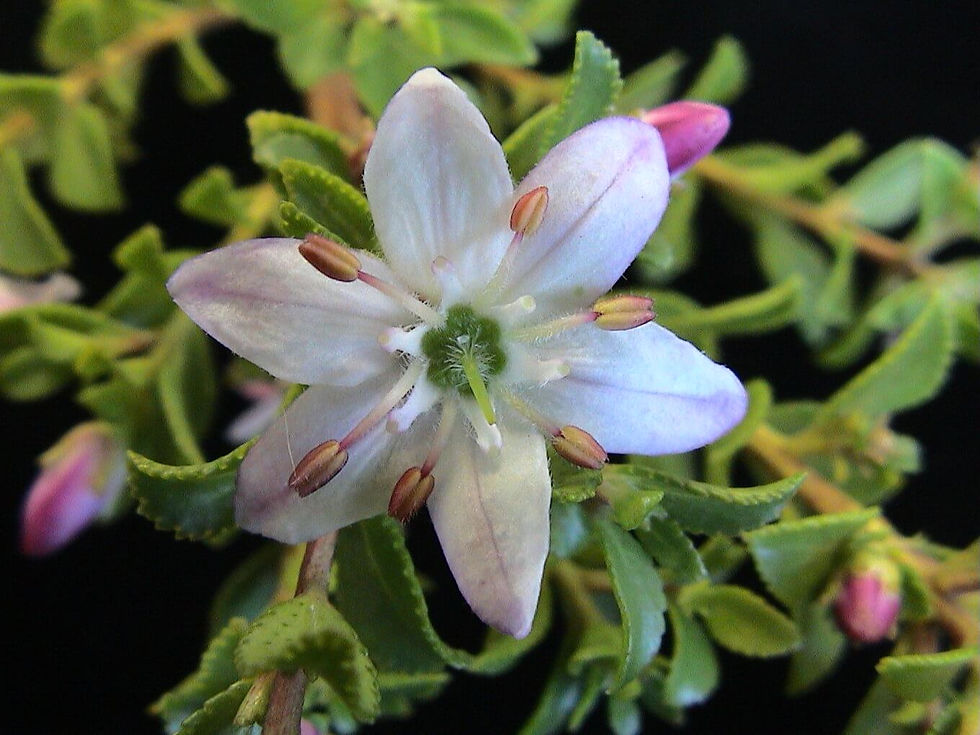
Agathosma betulina
Bergboegoe
.jpeg)
Importance:
Wild plants of this species are still plentiful but are being harvested faster than they can reproduce, posing a threat to the species' survival. This has led to efforts to cultivate them. The plant has been used by the indigenous people of South Africa as a folk remedy for various disorders, including urinary tract infections. The essential oils and extracts of the leaves are used as flavouring for teas, candy, and a liquor known as buchu brandy in South Africa. The two primary chemical constituents of the oils of A. betulina are isomenthone and diosphenol. The extract is said to taste like blackcurrant.
Sample Contributor contact details:
Louisa Blomerus
Agricultural Research Council
Date Published:
2025-01-19
Photo credit:
© L. Blomerus
Flora
bottom of page