top of page
Group:
Reptile
Estimated genome size:
17 cm maximum (total body length).
Size:
17 cm maximum (total body length).
Distribution:
It is found in the Eastern Cape, Free State, Western Cape and Northern Cape
provinces of South Africa.
PromethION Sequencing Report:
Output:
89.36 Gigabases
Approximate N50:
6.51 kilobases
Draft Genome Assembly Statistics:
Genome Length:
4.53 Gigabases
BUSCO completeness score (single and duplicated genes):
99.6% [Single: 50.6%, Duplicated: 49%]
Importance:
The greater padloper tortoise is endemic to South Africa and contributes to ecosystem stability in the Karoo. As the largest species in the genus Homopus, it is of scientific interest for studies of limb development, as it is one of only two Homopus species with four digits on each foot.
Sample Contributor contact details:
Zhongning Zhao
University of the Free State
Group:
Eudicot
Estimated genome size:
Size:
1 to 2 meters in height
Distribution:
Green heath occurs in the Western Cape and Eastern Cape provinces, from Piketberg in the Western Cape to Humansdorp in the Eastern Cape, including regions such as the Overberg, the Garden Route and the Cape Peninsula.
PromethION Sequencing Report:
Output:
75.76 Gigabases
Approximate N50:
15.37 kilobases
Assembly N50:
30 189.01 kilobases
Contig number:
2 067
Draft Genome Assembly Statistics:
Assembler used:
Hifiasm
Genome Length:
0.46 Gigabases
BUSCO completeness score (single and duplicated genes):
98.8% [S: 75.7%, D: 23.1%]
BUSCO database:
eukaryota
Erica sessiliflora
Green heath
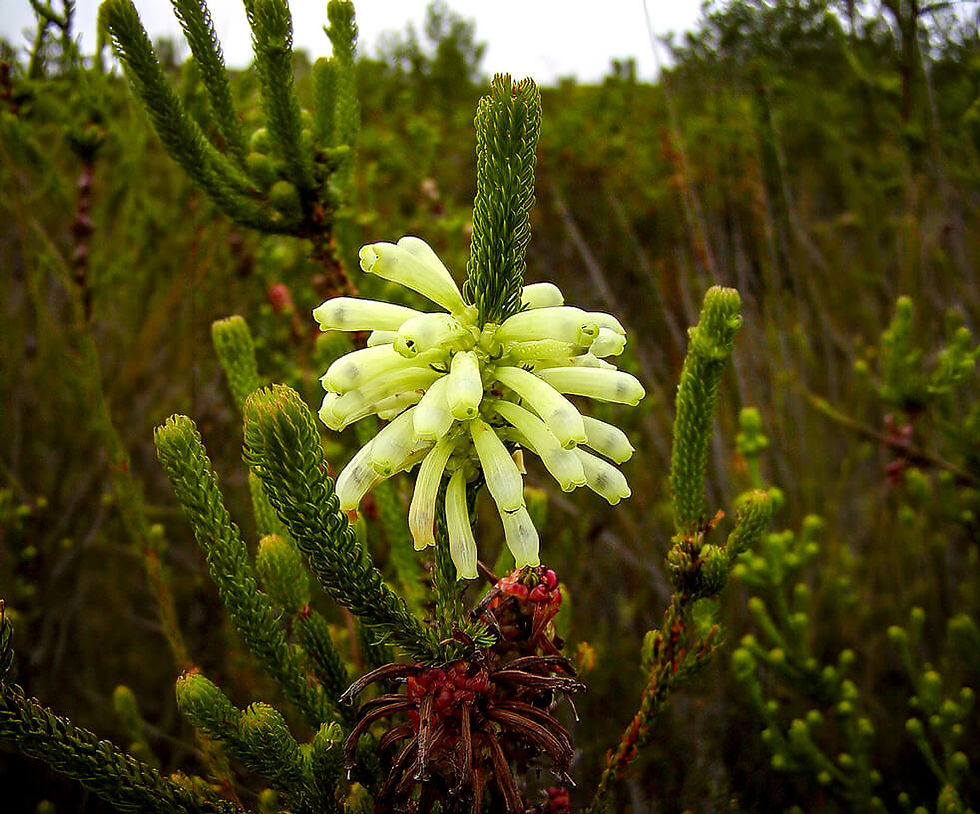.jpeg)
Importance:
Erica sessiliflora is significant for its unique sunbird pollination and its fire-adapted serotiny. Endemic to South Africa, it is valued as a garden shrub that attracts birds. Sequencing its genome improves biodiversity knowledge and supports conservation.
Date Published:
2026-03-17
Photo credit:
© P. Strauss
Flora
bottom of page