top of page
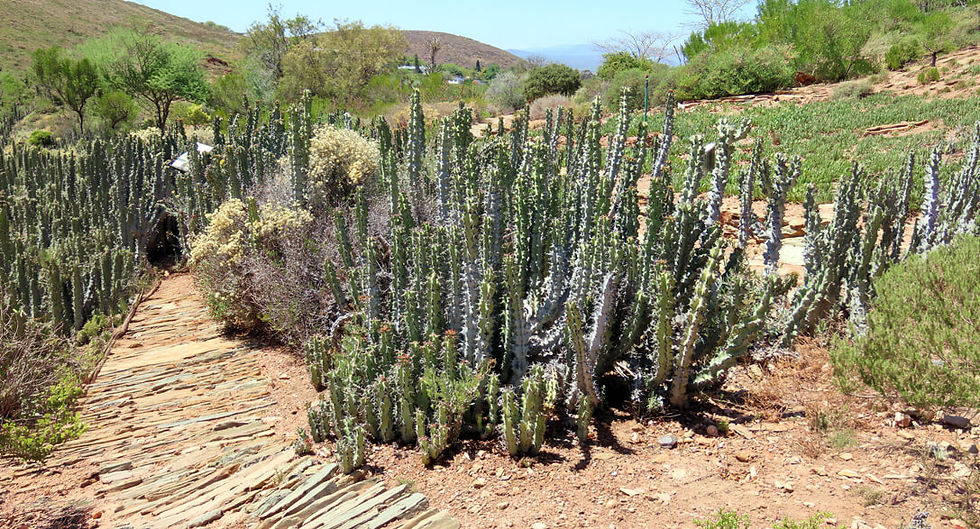_JPG.jpg)
Group:
Eudicot
Size:
1 m
Distribution:
Euphorbia radyeri (syn. Euphorbia caerulescens), grows on stony slopes and flats among arid scrub and larger bushes from Calitzdorp to Klipplaat and Jansenville.
PromethION Sequencing Report:
Output:
202.22 Gigabases
Approximate N50:
13.44 kilobases
Assembly N50:
12 527.56 kilobases
Contig number:
2 263
Draft Genome Assembly Statistics:
Assembler used:
Hifiasm
Genome Length:
5.77 Gigabases
BUSCO completeness score (single and duplicated genes):
99.5% [S: 7.5%, D: 92.0%]
BUSCO database:
Hifiasm
Importance:
The blounoorsdoring , blue euphorbia in English, is a drought-tolerant succulent valued in ornamental horticulture for water wise gardens. Its stems can be used as emergency livestock fodder after the latex has dried to reduce toxicity. The species itself is not currently threatened, but many southern African Euphorbia species face pressure from illegal collection and habitat loss, underscoring the importance of ecological research and conservation planning.
Sample Contributor contact details:
Mr Thabang Makola
South African National Biodiversity Institute
Date Published:
2026-02-05
Photo credit:
© T. Makola
Flora
bottom of page